
Can you really grow your money with a small investment in the forex market? Many people are drawn to forex trading, but uncertainty about getting started holds them back.
Forex trading offers a unique opportunity for individuals to participate in the global currency market, even with limited capital. The key is understanding the basics and leveraging the right strategies.
As a beginner, it’s natural to feel overwhelmed, but with the right guidance, you can navigate the world of forex trading and potentially achieve significant growth.
Key Takeaways
- Understand the basics of forex trading to get started
- Learn how to trade with small capital effectively
- Discover strategies for growth in the forex market
- Explore the benefits of forex trading for beginners
- Identify the right resources to support your trading journey
Understanding the Forex Market Basics
Understanding the mechanics of the forex market is essential for anyone looking to start trading with a small capital. The forex market, also known as the foreign exchange market, is a global marketplace where individuals, businesses, and institutions trade currencies.
What is Forex Trading and How Does It Work?
Forex trading involves the exchange of one currency for another with the aim of making a profit. It’s a decentralized market, meaning that it’s not controlled by a single entity, and operates 24/5, Monday to Friday. The forex market is the largest and most liquid financial market in the world, with a daily trading volume of over $6 trillion.
Key Terminology Every Beginner Should Know
To navigate the forex market effectively, beginners need to familiarize themselves with key terminology. Understanding these concepts is crucial for making informed trading decisions.
Currency Pairs and Pips
A currency pair is the quotation of two different currencies, with the value of one currency being quoted against the other. The base currency is the first currency in the pair, and the quote currency is the second. A pip is the smallest unit of price movement in forex trading, representing a change in the exchange rate.
Bid/Ask Prices and Spreads
The bid price is the price at which a trader can sell a currency pair, while the ask price is the price at which a trader can buy a currency pair. The difference between the bid and ask prices is known as the spread, which is a key factor in determining trading costs.
The Advantages of Forex Trading for Small Investors
Forex trading offers several advantages for small investors, including leverage, which allows traders to control larger positions with a relatively small amount of capital. Additionally, the forex market’s liquidity ensures that traders can enter and exit trades quickly and at a stable price.
How to Start Forex Trading with Small Capital
Many aspiring traders are deterred by the misconception that a large amount of capital is needed to start trading forex. However, with the right approach and understanding, it’s entirely possible to begin trading with a small amount of money.
Determining Your Initial Investment Amount
Before diving into forex trading, it’s crucial to determine how much you are willing to invest. The initial investment amount can vary significantly among brokers, with some allowing you to start with as little as $1. When deciding on your initial investment, consider your financial situation, risk tolerance, and trading goals.
Choosing the Right Broker for Small Accounts
Selecting a suitable broker is a critical step in your trading journey. For traders with small capital, there are two key factors to look for in a broker:
Low Minimum Deposit Requirements
A broker with low minimum deposit requirements makes it easier for you to start trading with small capital. Some brokers offer micro accounts that allow you to start trading with as little as $1.
Competitive Spread Offerings
Competitive spreads can significantly impact your trading profitability, especially when you’re trading with small amounts. Look for brokers that offer tight spreads to minimize your trading costs.
| Broker | Minimum Deposit | Average Spread |
|---|---|---|
| Broker A | $1 | 1.5 pips |
| Broker B | $100 | 2 pips |
| Broker C | $500 | 1 pip |
Setting Up and Funding Your First Trading Account
Once you’ve chosen a broker, the next step is to set up and fund your trading account. This process typically involves registering on the broker’s website, verifying your identity, and depositing funds into your account. Most brokers offer a variety of payment methods, including credit/debit cards, bank transfers, and e-wallets.
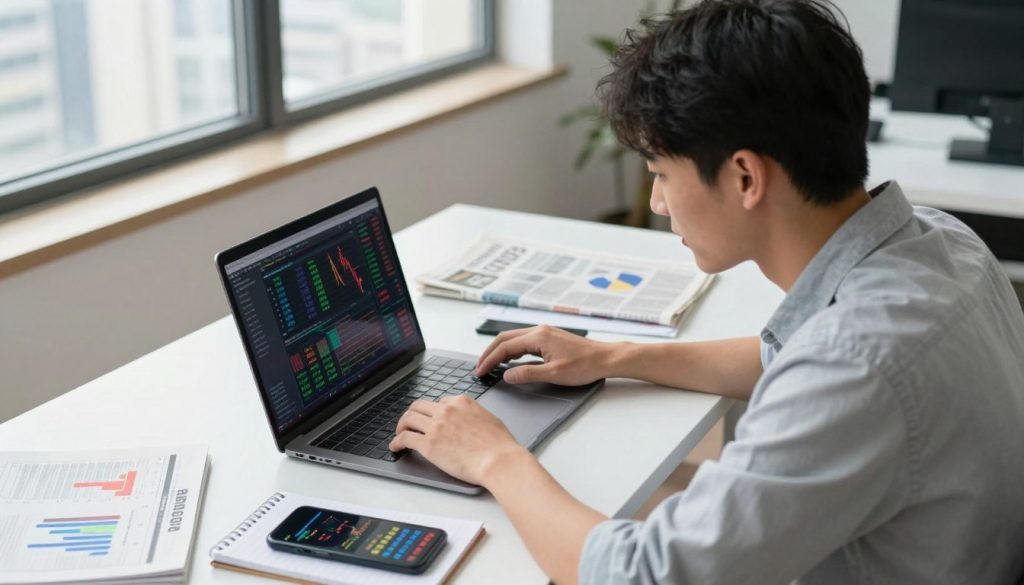
Creating a Realistic Trading Plan with Limited Funds
A well-thought-out trading plan is essential for success in forex trading, especially when working with limited funds. Your plan should outline your trading goals, risk management strategy, and the currency pairs you intend to trade. It’s also crucial to set realistic profit targets and stop-loss levels to manage your risk effectively.
By following these steps and maintaining a disciplined approach, you can successfully start forex trading with small capital and potentially grow your investment over time.
Essential Tools and Resources for Beginner Forex Traders
The journey into Forex trading starts with understanding the essential tools and resources available. As a beginner, it’s crucial to leverage these resources to build a strong foundation for your trading career.
Free vs. Paid Trading Platforms
When it comes to Forex trading platforms, beginners are often faced with the choice between free and paid options. Free platforms can be a good starting point, offering basic features and functionality. However, paid platforms typically provide more advanced tools, better customer support, and enhanced security features.
| Feature | Free Platforms | Paid Platforms |
|---|---|---|
| Trading Tools | Basic | Advanced |
| Customer Support | Limited | 24/7 Support |
| Security | Standard | Enhanced |
Educational Resources to Build Your Knowledge
Education is key in Forex trading. Beginners can benefit from various educational resources such as online courses, webinars, and eBooks. These resources help in understanding market dynamics, trading strategies, and risk management.
Demo Accounts: Practice Before You Invest
Demo accounts are an invaluable resource for beginners. They allow you to practice trading with virtual money, getting a feel for the markets without risking real capital. It’s a risk-free way to test your strategies and understand the trading platform.
Mobile Trading Apps for On-the-Go Management
In today’s fast-paced world, mobile trading apps are essential for managing your trades on the go. These apps offer the flexibility to monitor and adjust your trades from anywhere, at any time.
By utilizing these essential tools and resources, beginner Forex traders can significantly enhance their trading experience and improve their chances of success in the Forex market.
Small Capital Forex Trading Strategies
To succeed in forex trading with small capital, one must adopt a cautious yet proactive approach. This involves understanding and implementing effective trading strategies that mitigate risks while maximizing potential gains.
Micro and Nano Lot Trading
One of the key strategies for trading with small capital is using micro and nano lots. Unlike standard lots, which are typically 100,000 units of currency, micro lots are 1,000 units, and nano lots are 100 units. This allows traders to control smaller amounts of capital, reducing the risk exposure.
Leverage: Benefits and Risks for Small Accounts
Leverage is a double-edged sword in forex trading. It allows traders to control larger positions with a smaller amount of capital, potentially amplifying gains. However, it also increases the risk of significant losses. For small accounts, it’s crucial to use leverage judiciously.
Risk Management Techniques for Capital Preservation
Effective risk management is critical when trading with small capital. This includes setting appropriate stop losses and determining the right position size.
Setting Appropriate Stop Losses
Stop-loss orders are essential for limiting potential losses. By setting a stop loss, traders can automatically close a position when it reaches a certain price level, preventing further losses.
Position Sizing for Small Accounts
Position sizing involves determining the appropriate amount of capital to allocate to a trade. For small accounts, it’s vital to keep position sizes small to manage risk effectively.
| Strategy | Description | Risk Level |
|---|---|---|
| Micro Lot Trading | Trading with 1,000 units of currency | Low |
| Nano Lot Trading | Trading with 100 units of currency | Very Low |
| Leverage | Using borrowed capital to increase trade size | High |
Scalping and Day Trading with Limited Funds
Scalping and day trading are popular strategies among forex traders. Scalping involves making multiple small trades throughout the day, taking advantage of small price movements. Day trading involves opening and closing positions within a single trading day. Both strategies require careful planning and execution, especially when trading with limited funds.

By employing these strategies and maintaining a disciplined approach, traders with small capital can navigate the forex market more effectively and potentially achieve their trading goals.
Conclusion: Building Your Forex Journey with Small Capital
Starting your forex trading journey with small capital is not only possible but also a strategic way to manage risk while gaining valuable experience. By understanding the basics of the forex market, choosing the right broker, and employing effective trading strategies, you can set yourself up for success.
To begin, it’s essential to determine your initial investment amount and create a realistic trading plan. Utilizing micro and nano lot trading, along with leverage, can help you navigate the markets with limited funds. Additionally, practicing with demo accounts and leveraging educational resources can significantly enhance your trading skills.
As you embark on your forex trading journey, remember that risk management is crucial. Techniques such as scalping and day trading can be effective with small capital, but it’s vital to stay informed and adapt to market conditions. With the right tools and knowledge, you can grow your money and achieve your financial goals.
By following the steps outlined in this article, you’re well on your way to learning how to start forex trading with small capital. Take the first step today, and begin your journey into the world of forex trading for beginners.
FAQ
What is the minimum amount required to start forex trading?
FAQ
What is the minimum amount required to start forex trading?
The minimum amount required to start forex trading varies depending on the broker and the type of account. Some brokers offer micro accounts with minimum deposits as low as
FAQ
What is the minimum amount required to start forex trading?
The minimum amount required to start forex trading varies depending on the broker and the type of account. Some brokers offer micro accounts with minimum deposits as low as $1, while others may require $100 or more.
How do I choose the right forex broker for small capital?
When choosing a forex broker for small capital, look for brokers with low minimum deposit requirements, competitive spreads, and reliable customer support. Research and compare different brokers to find the one that best suits your needs.
What are the best forex trading strategies for small capital?
Some effective forex trading strategies for small capital include micro and nano lot trading, scalping, and day trading. It’s essential to understand the risks and benefits associated with each strategy and to develop a trading plan that suits your financial goals and risk tolerance.
How can I manage risk when trading forex with small capital?
To manage risk when trading forex with small capital, use techniques such as setting stop losses, position sizing, and limiting your leverage. It’s also crucial to educate yourself on risk management strategies and to stay disciplined in your trading approach.
Can I trade forex with a demo account?
Yes, many forex brokers offer demo accounts that allow you to practice trading with virtual money. Demo accounts are an excellent way to test your trading strategies, get familiar with trading platforms, and build your confidence before investing real money.
How do I fund my forex trading account with small capital?
To fund your forex trading account with small capital, you can typically use various payment methods such as credit/debit cards, bank transfers, or e-wallets. Check with your broker to see what payment options are available and choose the one that best suits your needs.
What are the benefits of using leverage in forex trading?
Leverage in forex trading allows you to control larger positions with a smaller amount of capital, potentially amplifying your gains. However, it also increases the risk of significant losses if not used carefully. It’s essential to understand the benefits and risks associated with leverage and to use it judiciously.
How can I stay up-to-date with market news and analysis for forex trading?
To stay up-to-date with market news and analysis for forex trading, you can use various resources such as financial news websites, trading platforms, and educational materials provided by your broker. You can also follow reputable financial analysts and news sources to stay informed about market developments.
, while others may require 0 or more.
How do I choose the right forex broker for small capital?
When choosing a forex broker for small capital, look for brokers with low minimum deposit requirements, competitive spreads, and reliable customer support. Research and compare different brokers to find the one that best suits your needs.
What are the best forex trading strategies for small capital?
Some effective forex trading strategies for small capital include micro and nano lot trading, scalping, and day trading. It’s essential to understand the risks and benefits associated with each strategy and to develop a trading plan that suits your financial goals and risk tolerance.
How can I manage risk when trading forex with small capital?
To manage risk when trading forex with small capital, use techniques such as setting stop losses, position sizing, and limiting your leverage. It’s also crucial to educate yourself on risk management strategies and to stay disciplined in your trading approach.
Can I trade forex with a demo account?
Yes, many forex brokers offer demo accounts that allow you to practice trading with virtual money. Demo accounts are an excellent way to test your trading strategies, get familiar with trading platforms, and build your confidence before investing real money.
How do I fund my forex trading account with small capital?
To fund your forex trading account with small capital, you can typically use various payment methods such as credit/debit cards, bank transfers, or e-wallets. Check with your broker to see what payment options are available and choose the one that best suits your needs.
What are the benefits of using leverage in forex trading?
Leverage in forex trading allows you to control larger positions with a smaller amount of capital, potentially amplifying your gains. However, it also increases the risk of significant losses if not used carefully. It’s essential to understand the benefits and risks associated with leverage and to use it judiciously.
How can I stay up-to-date with market news and analysis for forex trading?
To stay up-to-date with market news and analysis for forex trading, you can use various resources such as financial news websites, trading platforms, and educational materials provided by your broker. You can also follow reputable financial analysts and news sources to stay informed about market developments.